
Plant protein for athletes
Getting an optimal amount of protein is a big concern for a lot of athletes. Also, the protein part of the diet is the biggest factor in the environmental impact. On average, swapping animal based protein sources for plant based protein sources has great benefits, for both performance, health, climate and animals.
The first thing people ask when they know I advocate more plants in sports nutrition is often: but how about the protein? Well, it turns out enough protein intake is easy for most athletes, also on a (more) plant based diet. And that is because of two factors:
1. Athletes train and therefore use a lot of energy, so their energy intake should match that. That will almost automatically increase the absolute amount of protein. The energy percentage of protein does not need to change that much, if at all.
2. Training will increase the sensitivity of the muscle to use amino acids to synthesize new muscle tissue.
“But athletes need more protein”
We live in a protein hype and that has solid scientific background, but as it goes with hypes, is often taken way too far. The recommended daily allowance of protein (0,8 gram/kg/day) intake is too low for athletes. The optimum might be twice as high. But here comes the caveat: the athletes that would need the highest amounts push their bodies in training and often exceed twice the average energy intake. So the percentage of protein in the diet does not have to be all that different.
"But plants hardly contain protein"
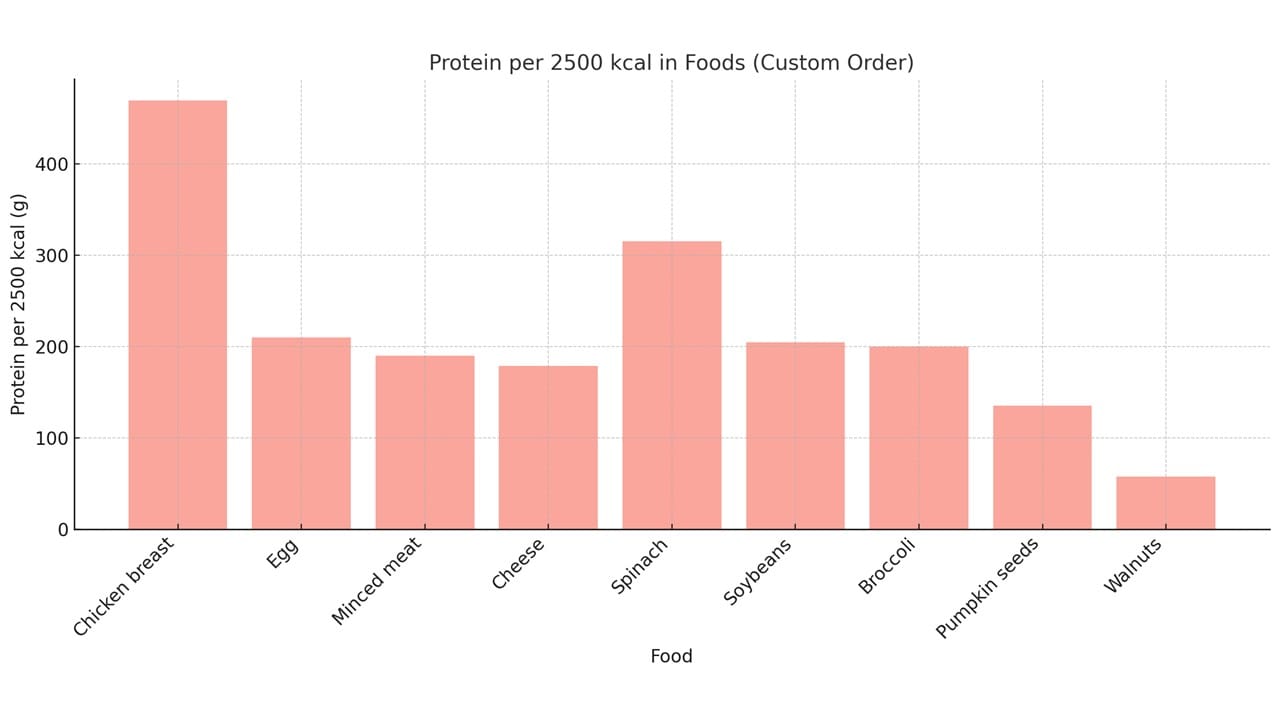
People often think binary about high protein foods: they think that a food either has a lot of protein, or that it doesn’t. The truth is that almost all whole foods contain some protein and that adds up over the day. A telling example is that in a double sandwich with an egg, there is more protein in the bread than in the egg. Also, nutrition tables are often calculated per 100 gram of product, sometimes per serving size. But what counts for the body is how much protein a food contains per unit of energy because the daily energy budget is what counts. Per calorie, broccoli or spinach contain similar amounts of protein to ground beef for example. You would need a lot of it, but every calorie of ground beef that is swapped for spinach actually increases protein intake.
“But plant proteins lack certain amino acids”
All plant proteins contain all essential amino acids, although the relative amounts differ a bit more from human needs than animal flesh. Different plant sources can compensate each other for limiting amino acids. Humans have practiced this for centuries and traditional dishes often combine different complimentary plant protein sources. This ensures that a limiting amino acid from one source is complemented by another source and vice versa. Examples are rice and tofu, maize and beans or even a sandwich (wheat) with peanutbutter.
“But plant proteins are hardly taken up”
Although it is truth that plant proteins are harder to digest and absorb, this accounts for only about 20%. This can be easily overcome by eating a little bit more protein rich foods. Plant based meat alternatives and plant protein shakes can be a good option, because the processing will increase digestion and absorption. Protein digestibility can be enhanced by soaking or fermentation, for instance with soaking beans or (fermented) tempeh.
“But whey has been shown to be superior”
Older studies with 20 gram of protein show a superior effect of whey over casein and soy. But it turns out that when 30 gram of protein is given, muscle protein synthesis seems to max out almost whichever kind of protein is given, animal or plant based. Also training studies show similar results between animal and plant protein sources when a total of 1,6 gram/kg/day of protein is provided in the diet.
In some cases, for instance in athletes with limited energy budget (for instance when trying to lose weight), there might be a case for increased animal protein intake. But these instances are rare and/or temporary.
To conclude, athletes can thrive and have an optimal protein intake on a (more) plant-based diet. The current average ratio of 70:30 animal:plant protein intake in athletes is not needed for performance, nor healthy, nor good for the climate. We recommend as default for athletes to aim for at least 60% plant proteins in the diet, with the possibility up to 100% for athletes who wish to eat completely plant based.
Key references:
NEVO table: https://nevo-online.rivm.nl/
PhD thesis Philippe Pinckaers https://www.m3-research.nl/3374-2/
Hevia‑Larrain, V., Gualano, B., Longobardi, I., Gil, S., Fernandes, A. L., Costa, L. A. R., Pereira, R. M. R., Artioli, G. G., Phillips, S. M., & Roschel, H. (2021). High‑protein plant‑based diet versus a protein‑matched omnivorous diet to support resistance training adaptations: A comparison between habitual vegans and omnivores. Sports Medicine, 51(9), 1919‑1931. https://doi.org/10.1007/s40279‑021‑01434‑9
Dimina L, Rémond D, Huneau J-F and Mariotti F (2022) Combining Plant Proteins to Achieve Amino Acid Profiles Adapted to Various Nutritional Objectives—An Exploratory Analysis Using Linear Programming. Front. Nutr. 8:809685. doi: 10.3389/fnut.2021.809685
